
The Trembling Middle
A Pilates class, a meditation on renunciation, and the practice of breathing into what we would rather rush through.

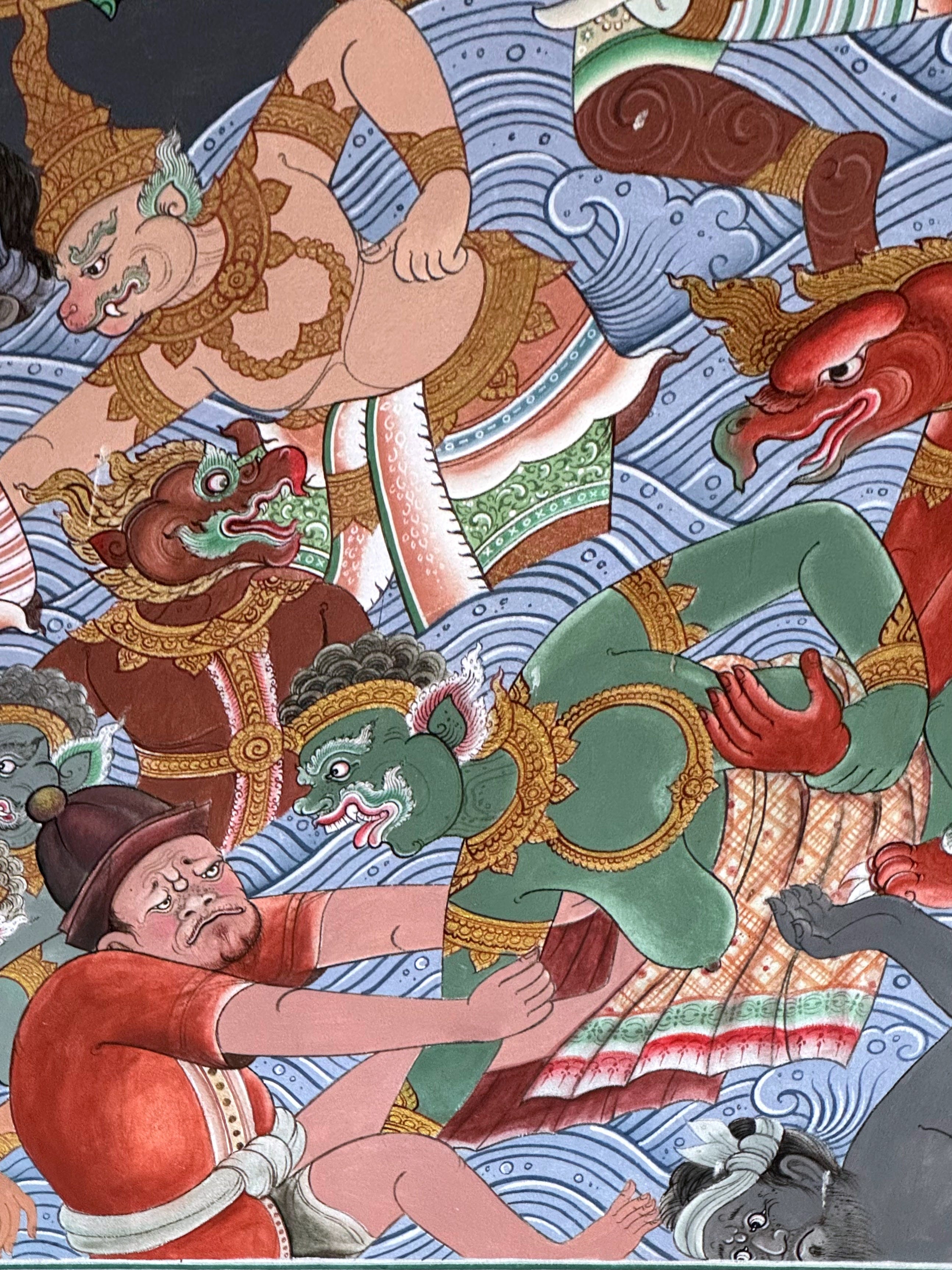
“Breathe into the discomfort, Omar. Slow down,” my Pilates teacher whisper-yells, as my hamstrings tremble and everything in me wants to go faster and get the set over with.
Yes, I go to Pilates. I live in LA.
I don’t know if you have ever been whisper-yelled at while folded over your own legs, but it is a very specific kind of spiritual confrontation. There is the calm voice of the instructor, the shaking of the body, and then the inner monologue that is definitely not enlightened. Mine is usually like: How much longer can ten seconds possibly be? How did my left hamstring forget how to move, and not my right? How is this never getting easier?
My general relationship to discomfort is to speed through or avoid it. Finish the thing. Escape the sensation. If something hurts, resist it. If something is uncertain, make a plan. My brain is excellent at turning discomfort into a strategy.
But Pilates does not care about my mind’s opinion.
The instruction is not to solve the discomfort. It is to breathe into it.
This seems counterintuitive. Most of the current wellness language I hear is to breathe in ease. Breathe out stress. Breathe in peace. Breathe out tension.
Why invite more discomfort?
Well, since the internet is always listening, I subsequently saw a social media post about a Tibetan Buddhist practice that focuses on breathing in suffering and breathing out kindness. I believe the practice is tonglen.


The flipped script stopped me.
Breathe in suffering. Breathe out kindness.
Not breathe in ease. Not breathe out stress. Breathe in what is heavy, and breathe out what is light.
Maybe because the practice was not trying to make suffering disappear. It was not treating discomfort as a disease to remove. It was suggesting a different relationship to what feels difficult. It loosens the rush to decide whether the feeling is good or bad. For a moment, it just is.
As if on cue, last week, my friend Nico Lee Cary led a meditation on renunciation.
Renunciation is not exactly a word that entered the second floor of the Hollywood Forever meditation space lightly.
It sounded severe. Monastic. Heavy. Like giving up all pleasure and possibly snacks. It has the feeling of a word that should be time-bound to something like Lent, not a daily practice.
But Nico opened it differently. He talked about renunciation through the Buddhist teachings on greed, hatred, and delusion. Again, more heavy words. They sound like spiritual crimes. The kind of words that make the ego look for an emergency exit.
But then he made them simple.
Greed is: what do you want more of?
Hatred is: what are you resisting?
Delusion is: what are you not seeing clearly because of what you want or what you resist?
Boom. Mic drop.
Suddenly these were not abstract moral categories. They were practical questions. Everyday questions. Questions I could feel in my hamstrings.
What do I want more of? Ease. Recognition. Certainty. Control. Time. Assurance that I am doing it right. Assurance that my oldest daughter leaving for college is a beautiful transition and not also quietly breaking something open in me. Assurance that becoming older is mostly wisdom and not also reading a restaurant menu by holding it farther and farther away from my face.
What am I resisting? Slowness. Dependence. Being misunderstood. Being ordinary. Being wrong. Being in discomfort without turning it into a lesson before I have actually felt it.
And then the hardest one: what am I not seeing clearly because of what I want or what I resist?
That is where delusion gets very practical. Wanting narrows vision. Resistance narrows vision. Together they make a tunnel, and inside that tunnel I can call my ambition optimism, my resistance discernment, my fear wisdom, my speed productivity, my not trusting others self-reliance, and my control care.
This is why the Pilates instruction keeps haunting me.
Slow down.
Breathe into the discomfort.
Be with what is.
Gratitude taught me I can feel my feelings without becoming my feelings.
Slowing down gives me fewer places to hide. I can feel where I am compensating. I can feel which side is weaker. I can feel where I am gripping. I can feel where my breath disappears. I can feel the exact moment when discomfort becomes a negotiation.
Maybe I don’t need to go that low.
Maybe this is good enough.
Maybe the instructor is distracted.
Maybe time is fake.
And then I hear: breathe.
Not breathe after the discomfort. Not breathe once I’ve escaped it. Breathe inside it.
I have spent a lot of my life trying to move through discomfort with speed. In some ways, this has served me well. Urgency can get things done. Impatience can cut through red tape. A deadline can focus the mind. A clear goal can move resources, people, and attention. There are times when moving fast is necessary.
But speed also has a cost.
Speed can make discomfort invisible. It can move us past the very place where the truth is trying to enter. It can turn life into a series of sets to finish, rooms to win, problems to solve, and feelings to explain. Speed can keep us from noticing what we are actually carrying.
This is where renunciation and becoming a stranger to yourself start to feel related.
Last week, I asked if you were willing to become a stranger to yourself. A few readers reached out, not just to say the piece resonated, but to reflect on where they too felt between selves.
Maybe because becoming a stranger to yourself is not as soft as becoming.
Becoming has a beautiful current-day sheen to it. I still think of Michelle Obama’s pastel blue book cover when I hear the word. Becoming feels aspirational. A self moving toward fullness. A self blooming into the best version of itself with good lighting and an excellent publishing team.
Willing to become a stranger to yourself is more stark. Less polished. Less achievement-oriented. It does not ask, what wonderful future self are you becoming? It asks, what familiar self are you willing to stop defending?
That may be a form of renunciation.
Not renouncing life. Not renouncing joy. Not renouncing desire or beauty or ambition or love. But renouncing the grip. Renouncing the speed. Renouncing the certainty that keeps us from seeing what is actually here.
Maybe we become strangers to ourselves when we finally notice the old self in motion. The self that wants more. The self that resists. The self that cannot see. The self that is so familiar we mistake it for truth.
To be clear, the practice is not to shame that self. We do not want to swing to the version of renunciation that turns into self-judgment.
We don’t need another performance review. Am I renouncing enough? Am I too greedy? Too resistant? Too delusional? Am I breathing correctly? What even is Pilates? Why are my hamstrings like this?
That is not freedom.
That is just modernity sitting on a meditation cushion.
The invitation, at least as I am beginning to understand it, is not to become a better self by attacking the current one. It is to see the current one clearly. To see the wanting without becoming the wanting. To see the resistance without becoming the resistance. To see the delusion without pretending we are above it.
This is where breath helps. When I breathe into discomfort, I am not trying to become heroic. I am trying to become honest. This is here. This is hard. This is shaking. This is where I want to rush. This is where I want more ease. This is where I resist what is happening. This is where I cannot yet see clearly.
And then, somehow, the exhale gives a little space for kindness.
Kindness does not magically make the discomfort disappear. The hamstrings still tremble. The set is still not over. The daughter is still leaving. The aging is still happening. The uncertainty remains uncertain.
But kindness changes the relationship. It softens the grip. It widens the room. It reminds the nervous system that discomfort does not always equate to danger. Sometimes discomfort is just where life is moving. Sometimes discomfort is the stretch between the old shape and the new one.
This is hard for me. I like the idea of transformation once it has already transformed. I like the story after the fact. I like the polished reflection. I like the wisdom that arrives with a clean sentence. I am less enthusiastic about the trembling middle. The part where nothing has resolved yet. The part where the old self is still very much present, and the new self has not arrived, and everyone is just hanging out awkwardly in the waiting room.
But maybe that is the actual practice.
Not the before. Not the after.
The trembling middle.
This is not a grand revelation. It is not a five-step plan. It is not a promise that suffering disappears if we breathe correctly. It is simply a practice of relationship with discomfort, with wanting, with resistance, with what we cannot yet see, and with the stranger self that begins to emerge when the familiar self loosens its grip.
Maybe that is enough for today.
Breathe in discomfort.
Breathe out kindness.
Go slower than you want to.
Feel what is here.
Deep bows and belly laughs,
Omar 🐒
P.S. Last week’s popular post, Free Radical, asking whether you are willing to become a stranger to yourself through the lenses of ancestry, becoming and belonging.
