Free Radical
Are you willing to become a stranger to yourself? A reflection on ancestry, belonging, becoming, and the free radicals who help make home possible.

Are you willing to become strange enough to let the future find you?
Not just strange to others. Strange, at times, even to yourself.
In one form or another, I have danced with that question for a long time. Sometimes it has shown up as restlessness. Sometimes as ambition. Sometimes as melancholy.
It’s the question that asks, am I in the right place? Do I belong here? Or is this a time to move on?
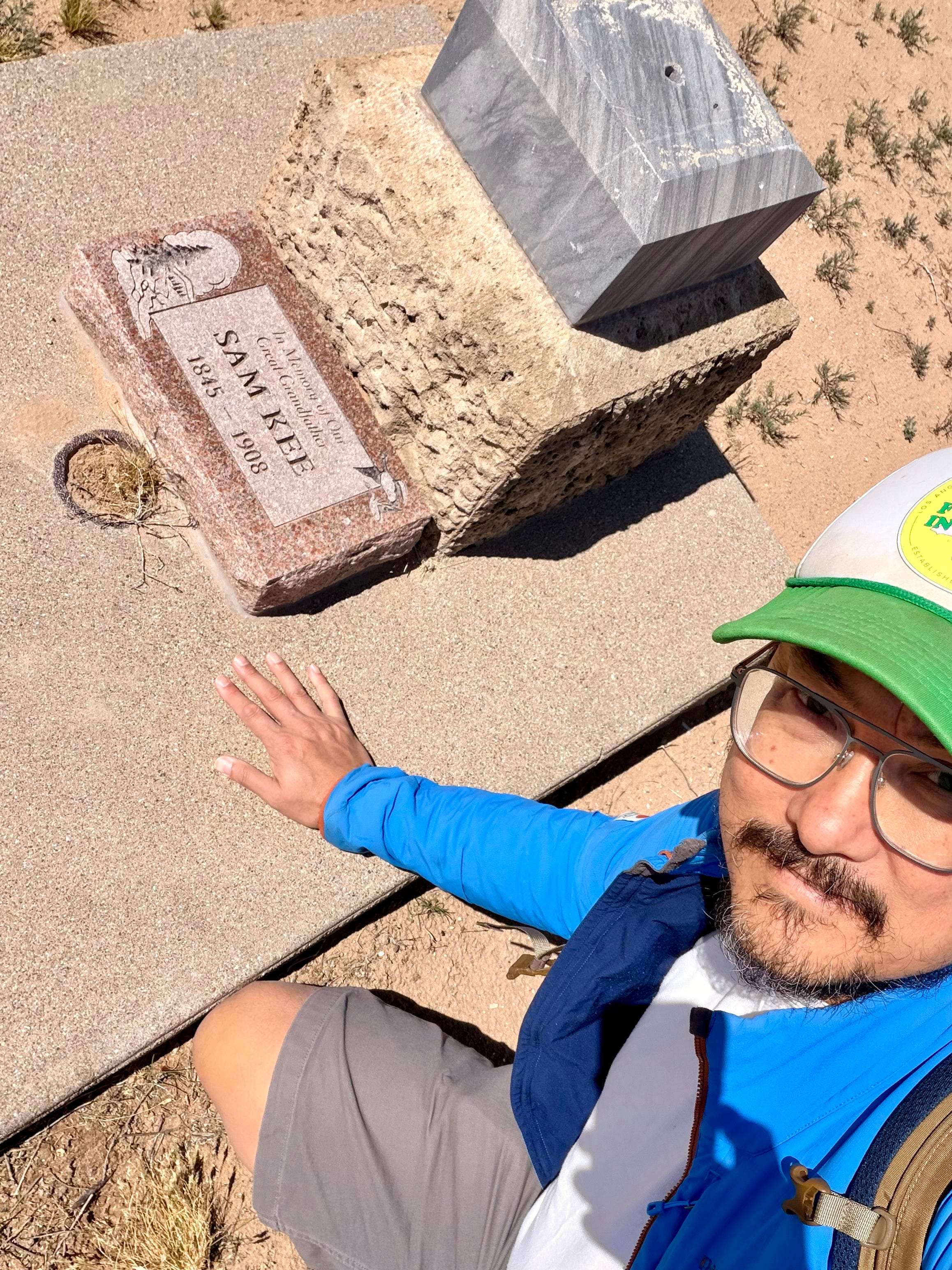
A few days ago, I stood in a historical Albuquerque cemetery at the grave of my great-great-grandfather, Sam Kee.
Born in 1845.
Died in 1908.
His tombstone says:
Here lies a stranger in a strange land.
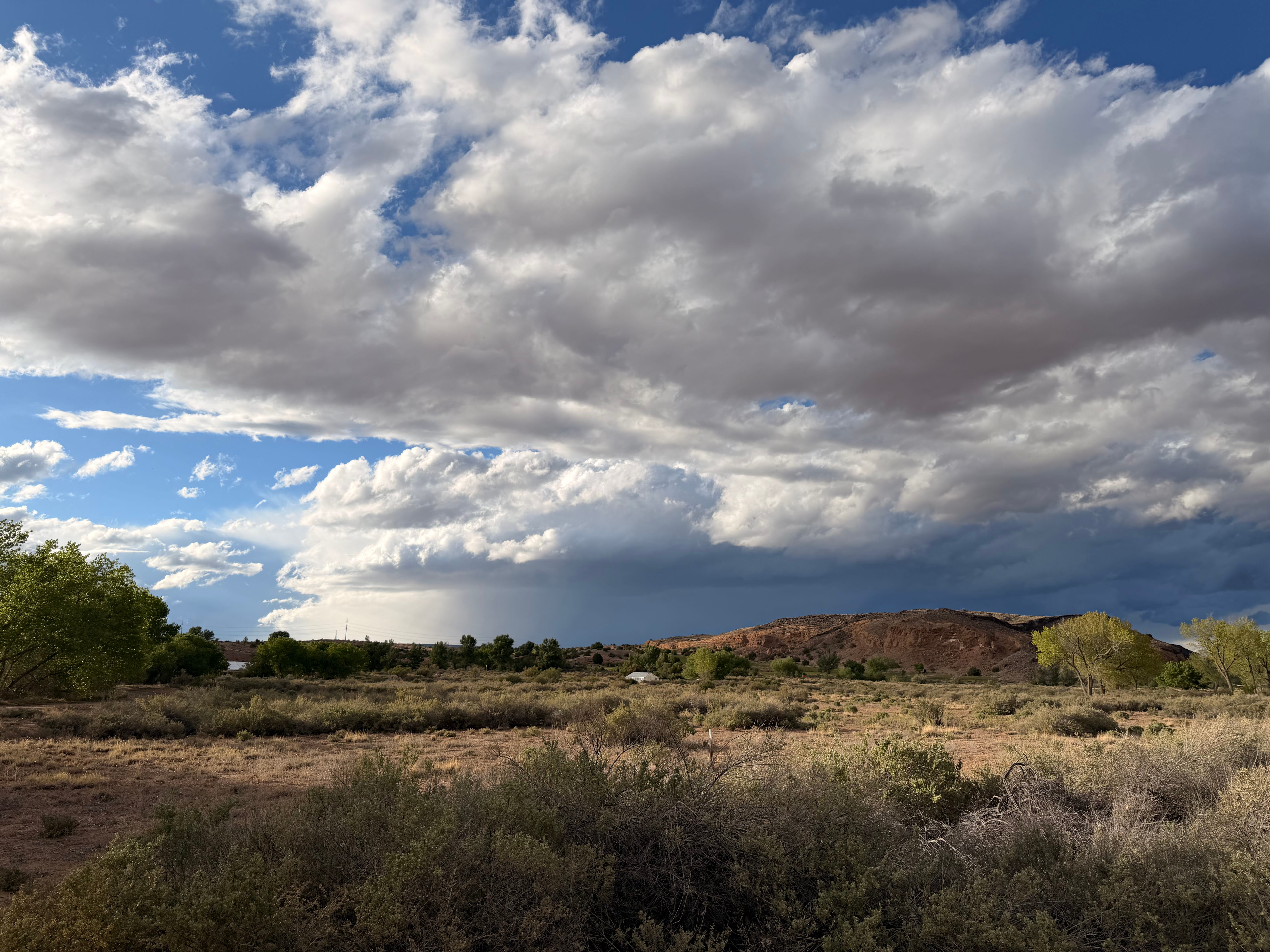
The air was crisp at almost 5,000 feet of elevation. I stood on desert ground softened with time. Albuquerque light has a way of making everything feel exposed. Nothing lush to hide behind. Just dry earth and open sky.
For a moment, time did not feel linear, even though it appears so when written.
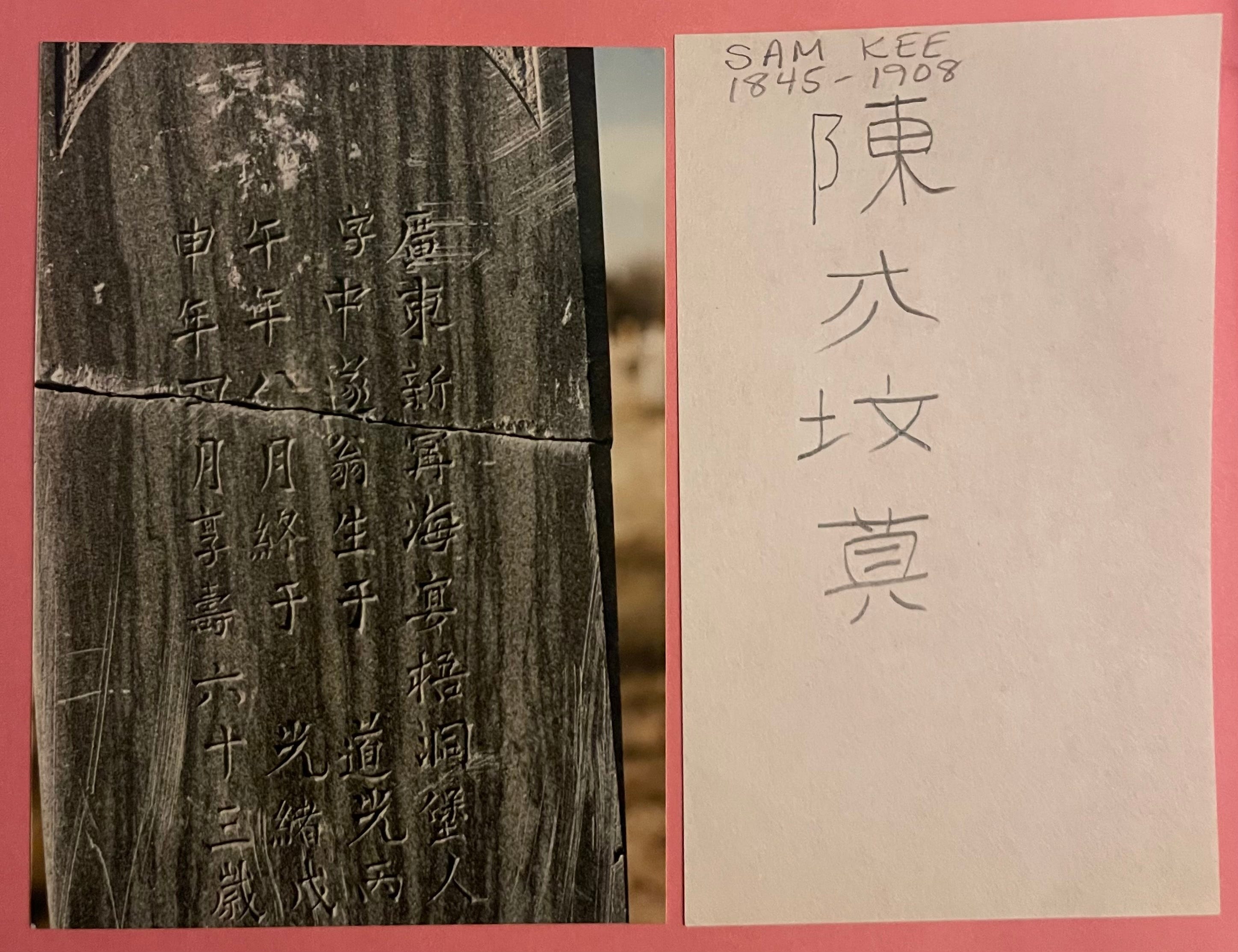
Sam Kee, born in Wudong Village in the 8th lunar month of the Bingwu year of the Daoguang reign.
His son, Sam Ho Kee, born in Albuquerque, in the territory of New Mexico, twenty-two years before it joined the U.S. Union.
My grandmother, Emma May Fong, born in Nanjing, near the Yangtze River, in eastern China.
My mom, Gale Fong Brownson, born in Sacramento.
Me, born in San Francisco.
My daughters, born in Los Angeles.
Whoever may come next.
We like to think of past, present, and future as separate categories. But what if they are more like inhales and exhales of the same breath?
It was as if the part of me that has never fully fit anywhere got to meet the part of him that had to survive being made strange. That gives me chills.


All to say, I come from a long line of free radicals.
Not free radicals like chaos. Free radicals in the chemical sense.
I am not a chemist (though my grandma was and will hopefully forgive my layperson’s metaphor), but as I understand it, a free radical is unstable because something is unpaired. It is reactive. It is looking for another bond. Sometimes that bond lasts. Sometimes it is temporary. Sometimes the reaction transforms the whole field around it.
That sounds about right.
Before visiting the cemetery, I was at a gathering with Zen Master Norma Wong (see her new Substack The Horizon Story) who called those of us who had come without an organizational team “free radicals.” I laughed because I recognized myself immediately. I have often been that person moving between rooms, between sectors, between identities, between belonging and not belonging. Not fully inside the institution. Not fully outside either. A little hard to place. Useless or not, maybe, because of that.
Either way, as I stood at Sam Kee’s grave, the phrase “free radical” took on a different charge.
The village before the strange land
The Chinese inscription on Sam Kee’s tombstone (now stolen) made him more specific than “from China” or even “from Canton.” He was from a village: Wudong Village, Haiyan Town, Xinning County, Guangdong Province — present-day Taishan, one of the great ancestral homelands of the Chinese diaspora.
A village.
A place where someone knew his name before America made him strange.
According to old newspaper accounts, Sam Kee became one of Albuquerque’s first Chinese storekeepers. He ran a curio shop on South Second Street that sold Chinese and Japanese goods. The paper noted that his broken English was a source of “patronizing amusement” among Anglos.
Patronizing amusement.
There’s a whole world in that phrase. The smile that is not welcome. The laughter that is not joy. The tolerance that is not belonging.
It would be easy to romanticize him as brave. And I do think he was brave. But bravery is too clean a word. It can make suffering sound noble, when sometimes suffering is just hard.
What I am more curious about now is what he left behind.
He came at a time when many Chinese men in the American West worked on railroads, in mines, in laundries, in kitchens, or in the narrow spaces of labor that racism allowed them to occupy. But Sam Kee became a merchant. That does not mean he was wealthy. I do not know enough to say that. But it does make me wonder what he was willing to leave behind and that maybe it was by choice, not just economic necessity. Either way, he did imagine himself as more than labor in someone else’s system.
It is one thing to imagine an ancestor leaving because there was nothing left for him.
It is another to imagine that he may have had something to lose.
Which brings me back to the question: why would someone leave a place where they were known to become a stranger somewhere else?
Maybe because becoming is worth more than just belonging. Even across an ocean.
Wealth of the heart
We can trace the family line six generations.
The first step was from Sam Kee to his son Sam Ho Kee.
Sam Ho Kee graduated from Albuquerque High School in 1906. According to newspaper accounts, he graduated in a class of twelve and was the first Chinese American high school valedictorian in the United States. He was later admitted to the University of Michigan without even needing to take the entrance exam. He would go on to study political philosophy and religion. He sought to understand the fundamental building blocks of how and why humans organize themselves.


This path was not a surprise, when you learn what Sam Ho Kee chose to say in his valedictory address:
“True wealth is not summed up in dollars and cents. The greatest Man who ever lived had not a place where on to rest his weary head, yet who will attempt to measure the extent of the influence of His life?”
Then he quoted Milton:
“There is nothing that makes men rich and strong but that which they carry inside of them. Wealth is of the heart, not of the hand.”
Wealth is of the heart, not of the hand.
I have spent much of my life working with the hand. Money. Design. Politics. Building things. Trying to shape the world through what could be seen, funded, entitled, and constructed.
The hand matters. The hand works. The hand plants seeds, writes poetry, holds children, places flowers on graves. The hand holds other hands. But the hand is not the source.
The heart is.
Sam Ho Kee was not talking about wealth in a vague, sentimental way. He was making a moral and spiritual argument. Influence is not measured only by what we possess. Purpose is not measured only by what we produce. A life can matter even when it owns very little.
“The greatest Man who ever lived had not a place where on to rest his weary head.”
That is faith.
Not faith as certainty. Not faith as doctrine alone. Faith as orientation. Faith as the inner wealth.
His father crossed into a land where he was made strange. His son stood before a graduating class and spoke of a wealth that could not be counted.
Faith that makes becoming feel like home. Or at least makes leaving bearable long enough for a new home to form.
This faith is my inheritance.
Belonging and becoming
I have been reflecting a lot lately on belonging and becoming.
Can you feel rooted enough to change? Can you leave without disappearing? Can you become without betraying where you came from?
I used to think belonging meant finding the right place, the right people, the right community, the right box, if we are being honest. But I have never been very good at boxes.
In high school, I hated filling out standardized tests where you had to check the box of one race or ethnicity. My mom is Chinese American. My dad is white. I have a Muslim name. The form would say: choose one.
I usually checked “Other.”
Other is a strange box. It names you by what you are not. Not this. Not that. Something else.
As a teenager, I didn’t have the language for it. I just knew there was something painful about not being fully recognized. Not erased exactly. But not seen either. Like everyone else had a place to go, and I was left drifting.
That gap became an unexpected teacher. I had to ask early in life who I was when no box quite fit. Over time, that question gave me the courage to seek undefined spaces rather than fear them.
Norma said many people get stuck and ask, “Should I move?”
A trickster asks, “Why not move?”
Not because movement is always the answer. Sometimes staying is the brave thing. Sometimes tending the same patch of earth is the deeper practice. Sometimes home asks us to remain long enough to become responsible to it.
But sometimes “Should I move?” is fear dressed up as discernment. Stay put. Be realistic. Don’t rock the boat. Wait your turn. Know your place.
There is a way that stuckness learns respectable language.
The trickster hears the fear underneath. Why not move? Why not loosen the bond that has become a cage? Why not leave the form that no longer allows for thriving? Why not become a stranger for the sake of a larger belonging?
This is where the free radical and the trickster feel like siblings. The free radical is unpaired, looking for the right bond. The trickster asks whether the old bond has become a cage. Both are willing to destabilize the familiar.
Both understand that movement is not always escape.
Sometimes movement is devotion to life.
Home as a condition
My friend Taj James named an arc that I have been returning to: from ownership to stewardship to kinship.
Ownership asks: what is mine?
Stewardship asks: what am I responsible for?
Kinship asks: who am I in mutual relationship with?
That feels like the deeper chemistry. Not just what do I possess. Not just what do I manage. But what am I bonded to? Who holds me? Who do I hold? Who do I know well enough to stay with when things get complicated?
Because they always get complicated.
Community is not a mood board. It is not a circle of people smiling in golden-hour light. From my work with community gardens, it is expensive water bills, old wounds, new leaders, uneven participation, someone taking tomatoes that are not theirs, someone not knowing how much labor came before they arrived.
Community is chemistry. Some pairings are immediate. Some are volatile. Some are temporary but necessary. Some bonds break. Some bonds save us.
Norma often says peace is not the absence of conflict. I need to keep hearing that because part of me still wants peace to mean ease. Harmony. No tension. Everyone getting along because we finally found the right words.
Maybe home is not only a place we return to. Maybe it is the condition we are called to create.
The daughter who is leaving
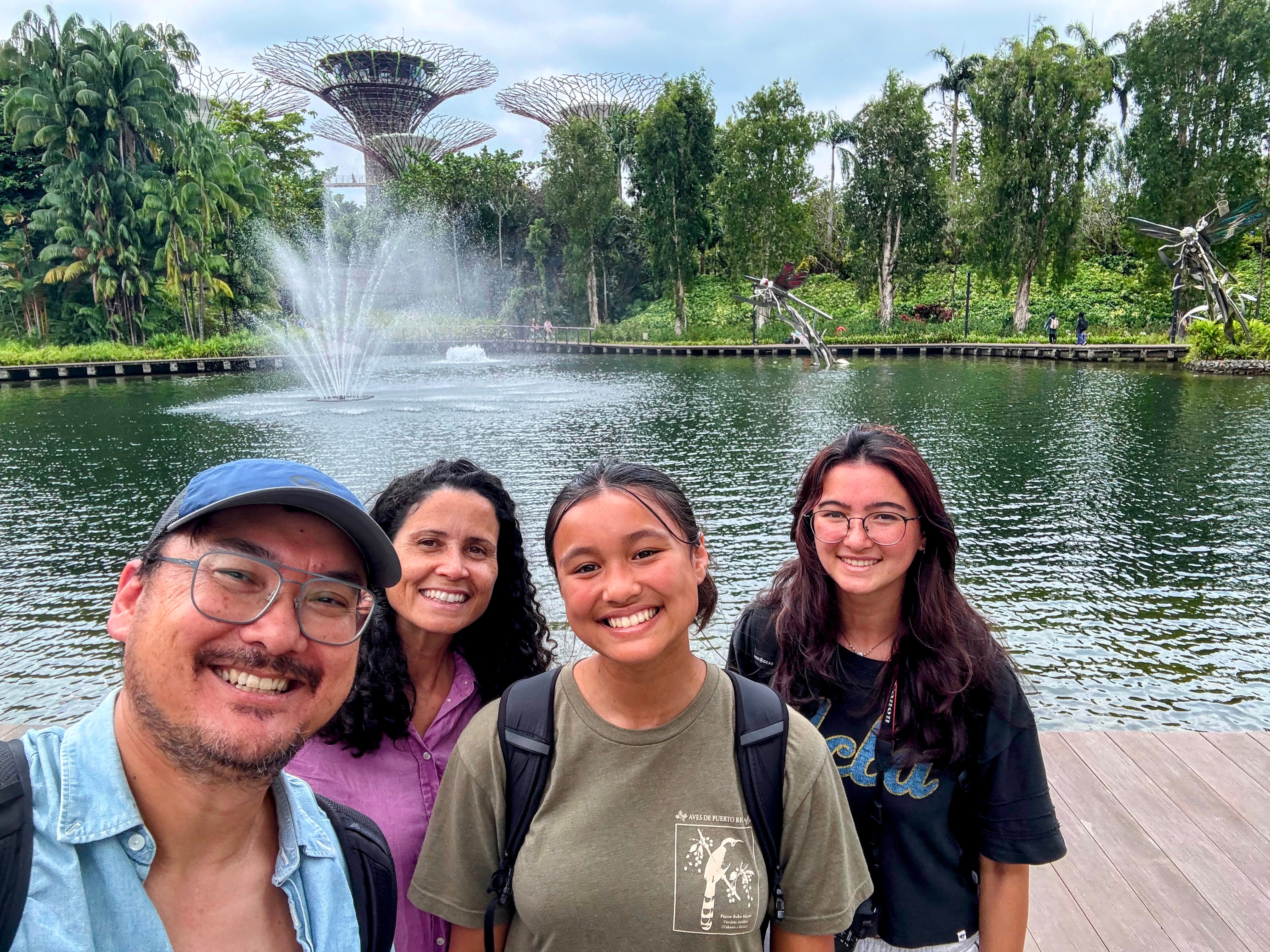
And now my oldest daughter is getting ready to leave for college. She just accepted UCLA, where she’ll study Biology and Society.
This is not the same kind of leaving as Sam Kee. She is not crossing an ocean with no guarantee of return. She is not being pushed by exclusion laws or economic necessity. She is not becoming a stranger in a strange land.
And still, as a father, I can feel the ancestral echo.
She is leaving home. Not far. Not forever. But enough that the shape of our family is changing.
A new chapter is opening. Her life is stretching beyond the daily rhythms that have held us for almost eighteen years: the school drop-offs, bonfires at the beach, spontaneous living room dance parties, arguments, eye rolls, prayers and gratitudes, and the ordinary repetitions that somehow become a life.
Now she is becoming.
Which means I have to practice letting go.
I wrote a song that opened: we poured our ocean into you. Now you are your own wave, reaching for new shores.
Parenting is a strange apprenticeship in non-attachment. Your children are yours, and they are not yours. You tend them, protect them, teach them how to cross streets, read books, say thank you, make rice, apologize, pay attention, trust themselves, recover from disappointment, and hopefully know they are loved without condition.
Then they leave.
Or they begin to.
And if you have done the work well enough and with enough fortune, they do not leave because they are rejecting home. They leave because home gave them enough room to grow.
That is the part I am trying to remember. The goal was never to keep her. The goal was to help create the conditions where she could thrive.
Home as a condition, not just a place. A movement like an ocean wave.
I can feel the ache in that. I can also feel the blessing.
The ancestor I am becoming
When Norma opened the gathering, she began by acknowledging our ancestors. She said:
“When we greet our ancestors, we are never alone.”
Standing at Sam Kee’s grave, I felt that. Not in a ghostly way. More like chemistry. Like some charge moving through time. Like the part of me that has never fully fit anywhere meeting the part of him that had to survive being made strange.
Maybe we greet our ancestors not because they answer us. Maybe we greet them because they restore relation. They remind us that we are not isolated selves floating through history. We are bonds broken and re-formed, carried and carrying.
Blessed, in its etymology of meaning that someone sacrificed before us.
And now it is our turn.
Here I am, five generations later, asking what sacrifice I would make so that five generations from now, my descendants might have a better life. Not just more money. Not just more achievement. Not just more comfort.
What would it mean for them to inherit clean water, communities that know how to share land, a culture less addicted to extraction, a way of belonging that does not require anyone to become less of themselves?
These are not small questions. But ancestry does not ask small questions.
It asks what we are bonded to. It asks what we are willing to tend. It asks whether we can move from ownership to stewardship to kinship before it is too late.
For a little while, we get this life. One strange, charged, temporary life.
We get to be free radicals, looking for the right pairing, making and breaking bonds, tending land, memory, conflict, and the heart, not just the hand.
Sam Kee was a free radical. A stranger in a strange land.
Sam Ho Kee was one too. A young man standing before his class in 1906, saying true wealth could not be counted in dollars and cents.
And now my oldest daughter is preparing to leave. Not as exile. Not as rupture. But as becoming. A new bond forming. A new life unfolding. Another crossing.
Maybe this is what family is. Not a fixed place. Not a perfect lineage. Not an unbroken chain.
Family is a chemistry of leaving and returning, breaking and bonding, belonging and becoming. A way of carrying what came before without being trapped by it. A way of becoming strange enough to let the future find us.
I stood in the high desert, with the past and future moving through the same air.
A wave goodbye is also a greeting to a new shore.
What are you being asked to leave?
And what future is trying to greet you?